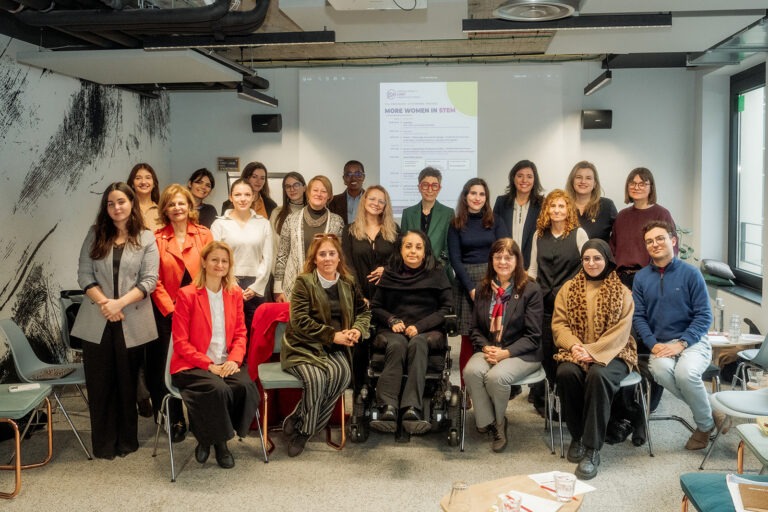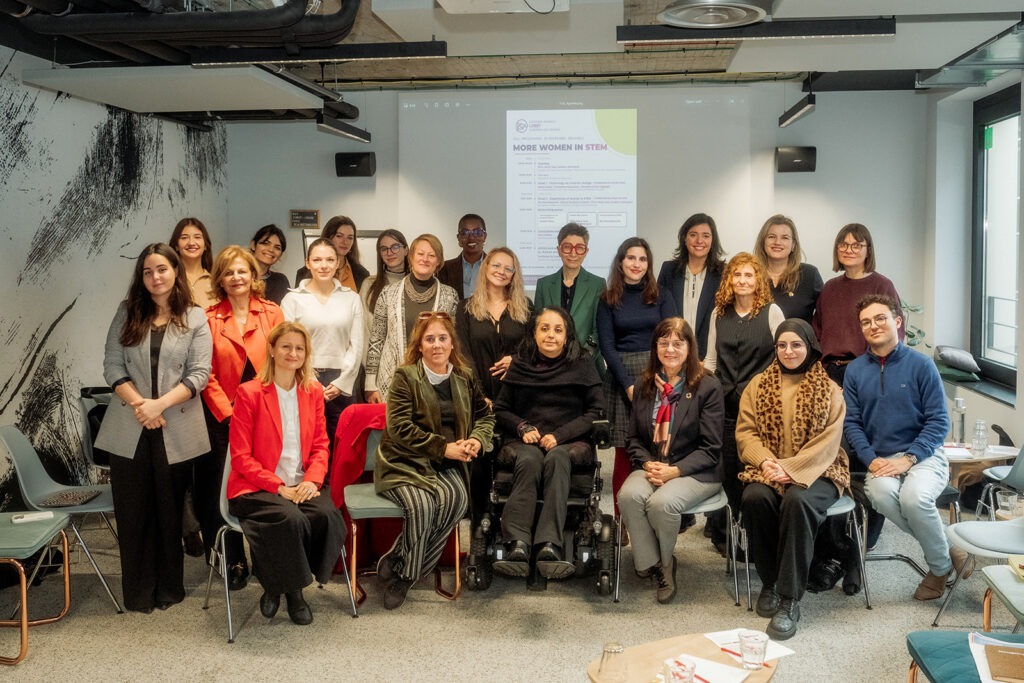
How can we ensure that technological progress benefits everyone, rather than reinforcing existing inequalities? This question was at the heart of the European Women’s Lobby’s More Women in STEM event, held in Brussels on 25 November 2026.
Bringing together voices from technology, policymaking and civil society, the event explored women’s participation in science, technology, engineering and mathematics (STEM), the challenges posed by gender bias in artificial intelligence (AI), and the potential of technology to advance inclusion and equality.
Why more women in STEM matters
Women remain significantly underrepresented across the technology sector, from STEM education and research to leadership and decision-making positions. In the EU, women account for just 19.5% of ICT specialists, while only one in three STEM graduates is a woman. Globally, women represent just 12% of AI researchers.
This imbalance has consequences beyond representation. When women are excluded from the development and design of new technologies, their experiences, needs and perspectives risk being overlooked. At the same time, gender bias embedded in datasets, algorithms and design processes can reproduce existing inequalities and discrimination.
Yet technology also holds considerable potential to advance equality. Assistive technologies, accessible digital services and inclusive innovation can improve independence, participation and quality of life for women and girls, including women with disabilities.
Building an inclusive digital future therefore requires more than protecting women from technological harms. It means ensuring that women are equally involved in developing, leading and shaping the technologies that increasingly influence our everyday lives.
From technological innovation to inclusive change
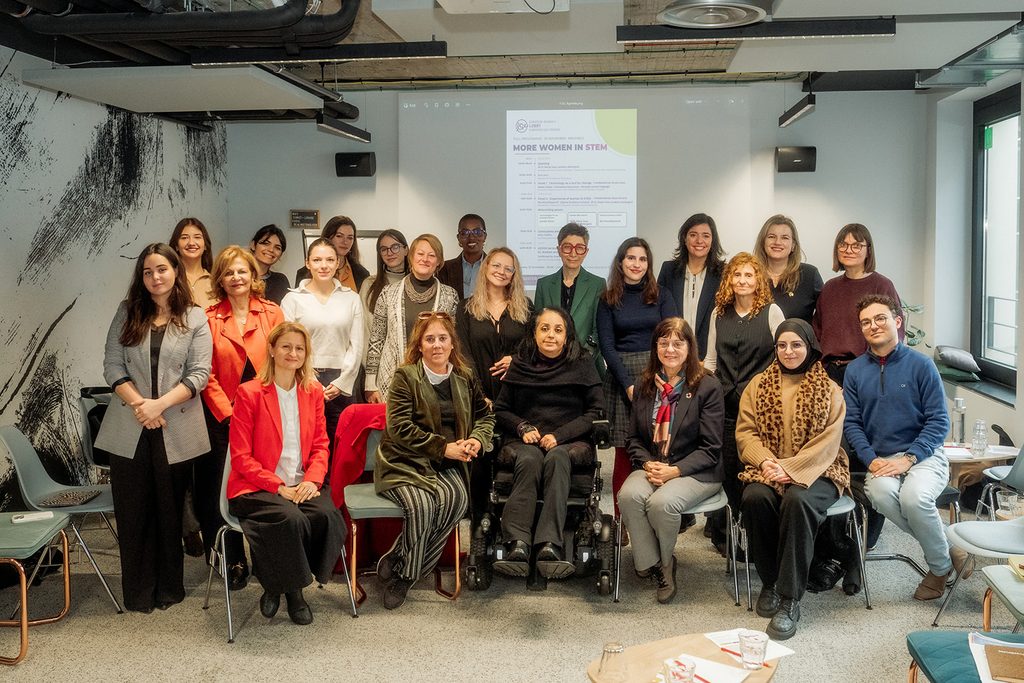
The morning opened with remarks from Ph.D. Maria Jose Landeira Østergård, Member of the European Women’s Lobby Executive Committee, followed by an address from Evin Incir, Member of the European Parliament.
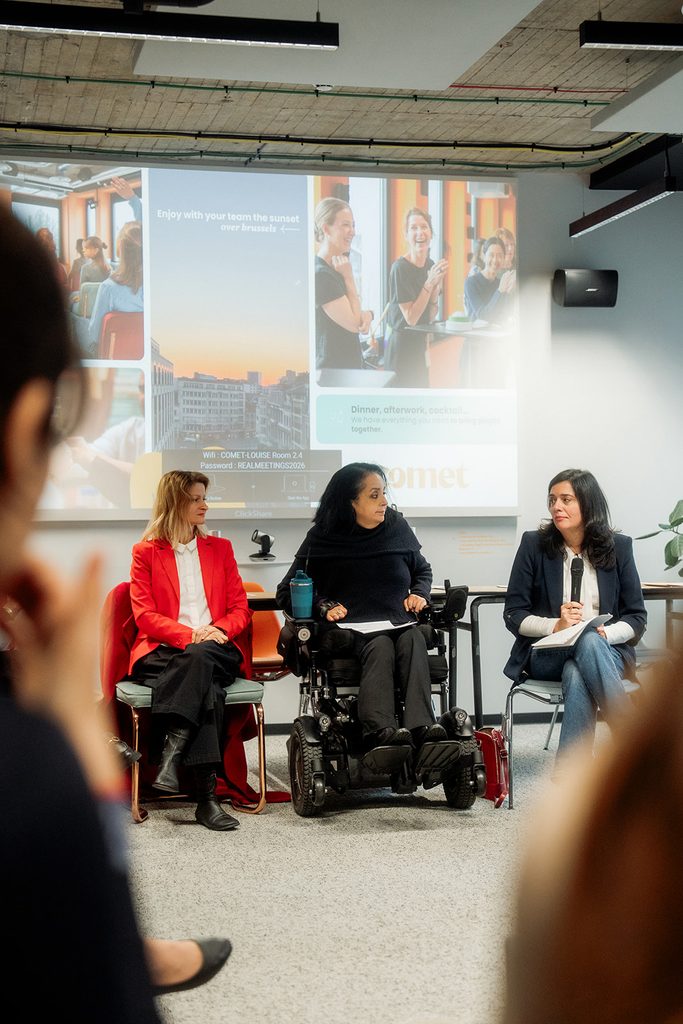
The first panel, Technology as a Tool for Change, brought together Nadia Hadad (European Disability Forum), Svetoslava Stoyanova (New Mindset Coaching) and Manuela Doutel Haghighi (Microsoft Portugal), under the moderation of Shada Islam. The discussion explored how technology and innovation can contribute to greater inclusion and create opportunities for women and girls.
The second panel, Experiences of Women in STEM, featured Nia Khechikashvili, Diyana Ducheva-Conachi and Ph.D. Maria Jose Landeira Østergård, moderated by Maya Doneva. It focused on women’s experiences in the sector and the importance of addressing the barriers that continue to affect their participation and career progression.
Three priorities for a more inclusive digital future
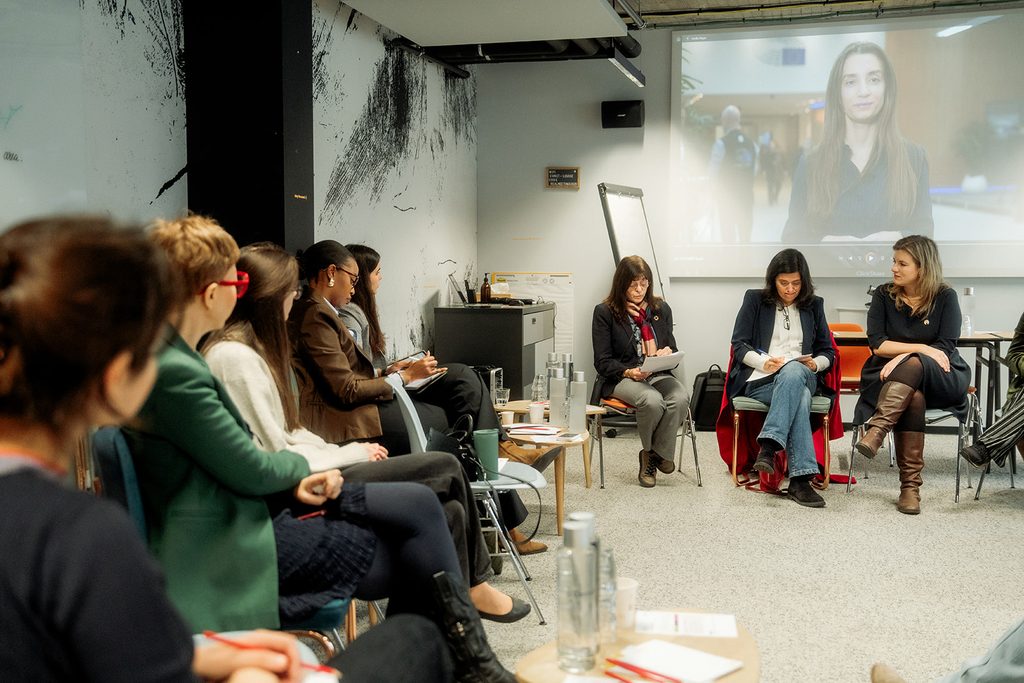
In the afternoon’s networking sessions, participants came together in smaller groups to explore three interconnected themes: technologies for an inclusive future, gender bias and AI, and young women in STEM.
The discussions addressed questions ranging from accessible product design and assistive technologies to algorithmic discrimination, fair recruitment systems, education pathways, mentoring and the importance of role models.
These themes also reflect wider challenges facing Europe. As AI becomes increasingly integrated into recruitment, education and the workplace, ensuring transparency, accountability and human oversight is essential. Likewise, making technology accessible and ensuring that women and girls can participate fully in digital education and employment must remain central to Europe’s digital transition.
Investing in young women’s access to STEM is particularly important. Breaking down stereotypes, expanding opportunities and creating supportive environments are essential steps towards ensuring that the next generation of women can participate in and shape the future of work.
Exploring the future through LEGO® SERIOUS PLAY®
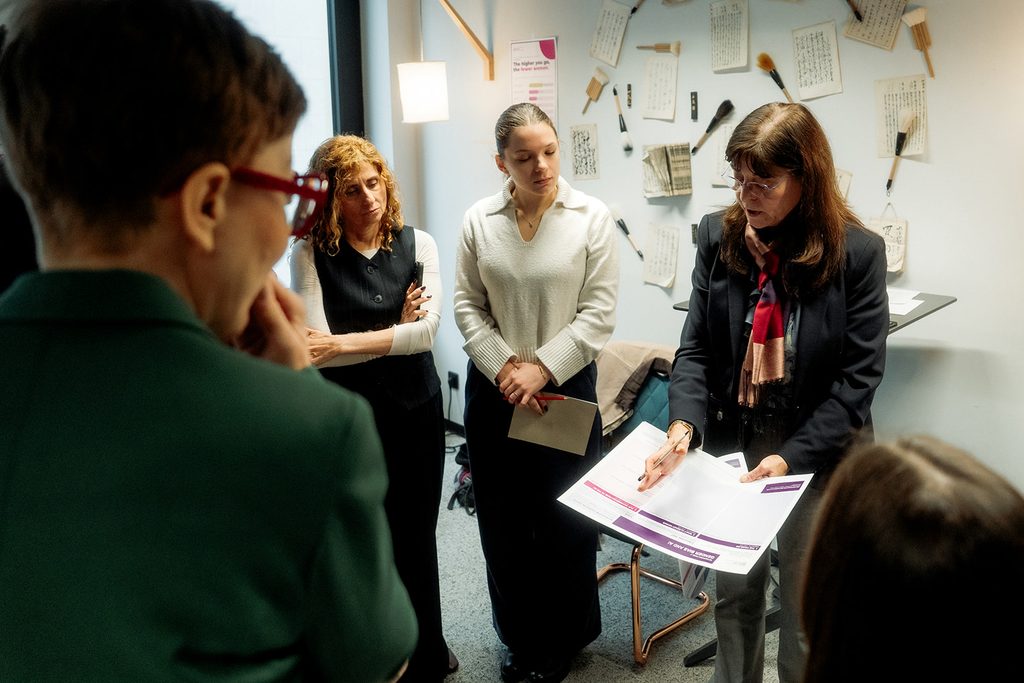
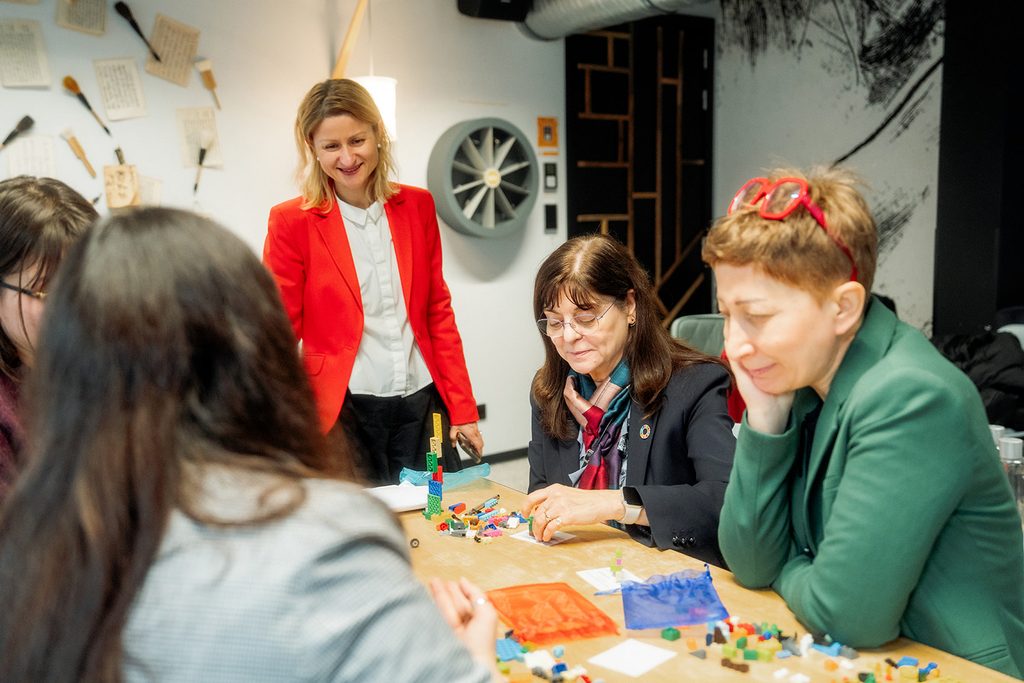
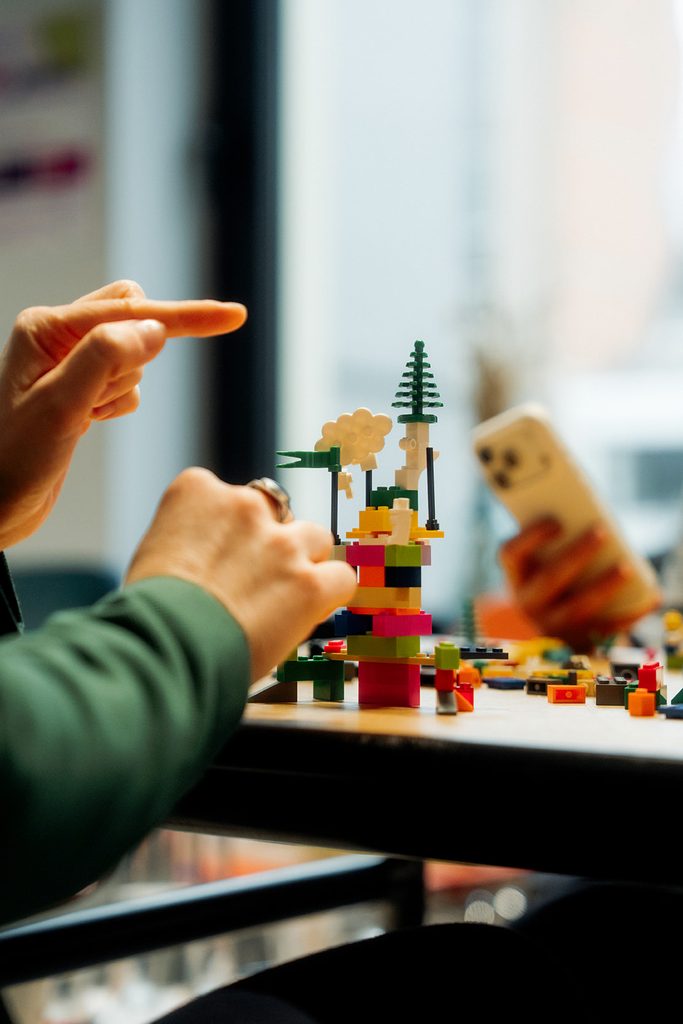
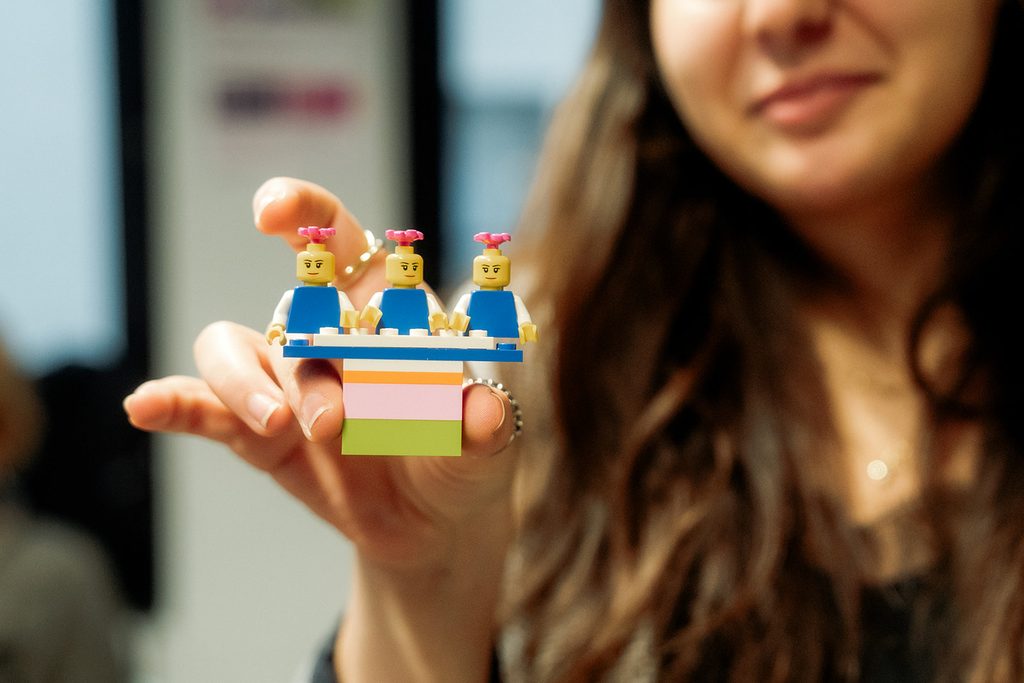
The afternoon also included an interactive LEGO® SERIOUS PLAY® workshop on AI, Women and Change Management, facilitated by Svetoslava Stoyanova.
Using LEGO® models as a tool for expression and collective reflection, participants had the opportunity to explore ideas around artificial intelligence, women’s role in technological change and the future of work in a creative and collaborative setting.
The workshop offered a different way to engage with complex questions, encouraging participants to express perspectives, share ideas and reflect on how women can actively shape technological transformation.
Turning discussions into action
The conclusions and highlights gathered throughout the event will feed into an upcoming More Women in STEM report, which will contribute to EWL’s work on policy recommendations and advocacy.
Our ambition is clear: technological progress must be human-centred, accessible and grounded in equality and human rights. This means promoting responsible innovation, challenging gender bias in AI, supporting assistive technologies and ensuring that women in all their diversity are recognised as innovators, leaders and decision-makers.
A heartfelt thank you to everyone who participated, and particularly to our speakers and moderators for sharing their knowledge, experiences and perspectives. We also thank everyone who contributed to the discussions and helped make this exchange possible.
An inclusive digital future cannot be built without women. It is time to ensure they have an equal role in shaping it.